
The No-Nonsense Guide to LLC Beneficial Ownership Filing
Why Beneficial Ownership Information (BOI) Reporting Matters for LLC Owners
Beneficial ownership information BOI reporting requirements have undergone dramatic changes in 2025, creating confusion for thousands of LLC owners. If you're worried about compliance deadlines, steep penalties, or whether your company still needs to file, you're not alone.
Quick Answer: Current BOI Filing Requirements (as of March 2025)
U.S. Domestic LLCs: Now exempt from BOI reporting to FinCEN under the March 26, 2025 interim final rule
Foreign LLCs registered in the U.S.: Must file by April 25, 2025 (if registered before March 26) or within 30 days (if registered on/after March 26)
U.S. persons as beneficial owners: Exempt from reporting requirements
No filing fee: Reporting remains free through the FinCEN portal
Penalties: Not currently being enforced for U.S. companies and citizens
The Corporate Transparency Act was passed in 2021 to combat money laundering and illicit finance by requiring many companies to report who truly owns and controls them. For over a year, millions of business owners scrambled to understand complex rules about 25% ownership thresholds, substantial control definitions, and tight filing deadlines.
Then everything changed.
In March 2025, the U.S. Treasury Department announced it would not enforce BOI reporting penalties for U.S. companies and citizens. An interim final rule published March 26, 2025 officially exempted all domestic entities created in the United States from BOI reporting requirements entirely. Only foreign entities registered to do business in any U.S. state must now file.
But relief from federal requirements doesn't mean you're done with beneficial ownership reporting. State laws like the New York LLC Transparency Act (NYLTA) still require separate disclosures, and the rules continue to evolve. Understanding what's required, what's changed, and what still applies to your LLC is critical to avoiding penalties that can reach hundreds of dollars per day.
The 2025 Shift: Current Status of Beneficial Ownership Information BOI

The landscape for Beneficial ownership information BOI underwent a seismic shift in early 2025. For the first year of the program, the Financial Crimes Enforcement Network (FinCEN) estimated that over 32 million businesses would be required to report. However, legal challenges and administrative reviews led to a Treasury Department announcement on March 7, 2025, where a significant non-enforcement policy was declared.
This was followed by an Interim Final Rule published on March 26, 2025, which fundamentally redefined who is considered a "reporting company." Under this new rule, the requirement for U.S. companies and U.S. persons to report Beneficial ownership information BOI to FinCEN was effectively removed.
Today, the federal reporting mandate is focused almost exclusively on foreign entities. If you are a U.S.-based LLC formed in any U.S. state, you are no longer required to submit this information to the federal government.
Entity Type Reporting Status (Post-March 2025) Deadline Domestic U.S. Companies Exempt / Removed N/A U.S. Citizens / Persons Exempt / Removed N/A Foreign Entities (Registered before 3/26/25) Required April 25, 2025 Foreign Entities (Registered on/after 3/26/25) Required 30 Days from Registration
Impact on U.S. Persons and Domestic LLCs
For the average American entrepreneur, this update is a massive relief. Previously, any "domestic reporting company"—defined as a corporation, LLC, or similar entity created by filing a document with a secretary of state—had to disclose the personal details of their owners.
As of the latest announcement, the Treasury Department has clarified that it will not impose any penalties or fines against U.S. citizens or domestic reporting companies. This means that if you are a U.S. person who owns a domestic LLC, you do not need to worry about the federal FinCEN filing. The focus of the Corporate Transparency Act (CTA) has been narrowed to address the risks associated specifically with foreign-formed entities operating within U.S. borders.
Understanding the Corporate Transparency Act and BOI
The Corporate Transparency Act (CTA) was enacted in 2021 as part of the Anti-Money Laundering Act. Its primary goal was to prevent bad actors from using shell companies and anonymous entities to hide illicit finance, such as money laundering, terrorism financing, and tax evasion.
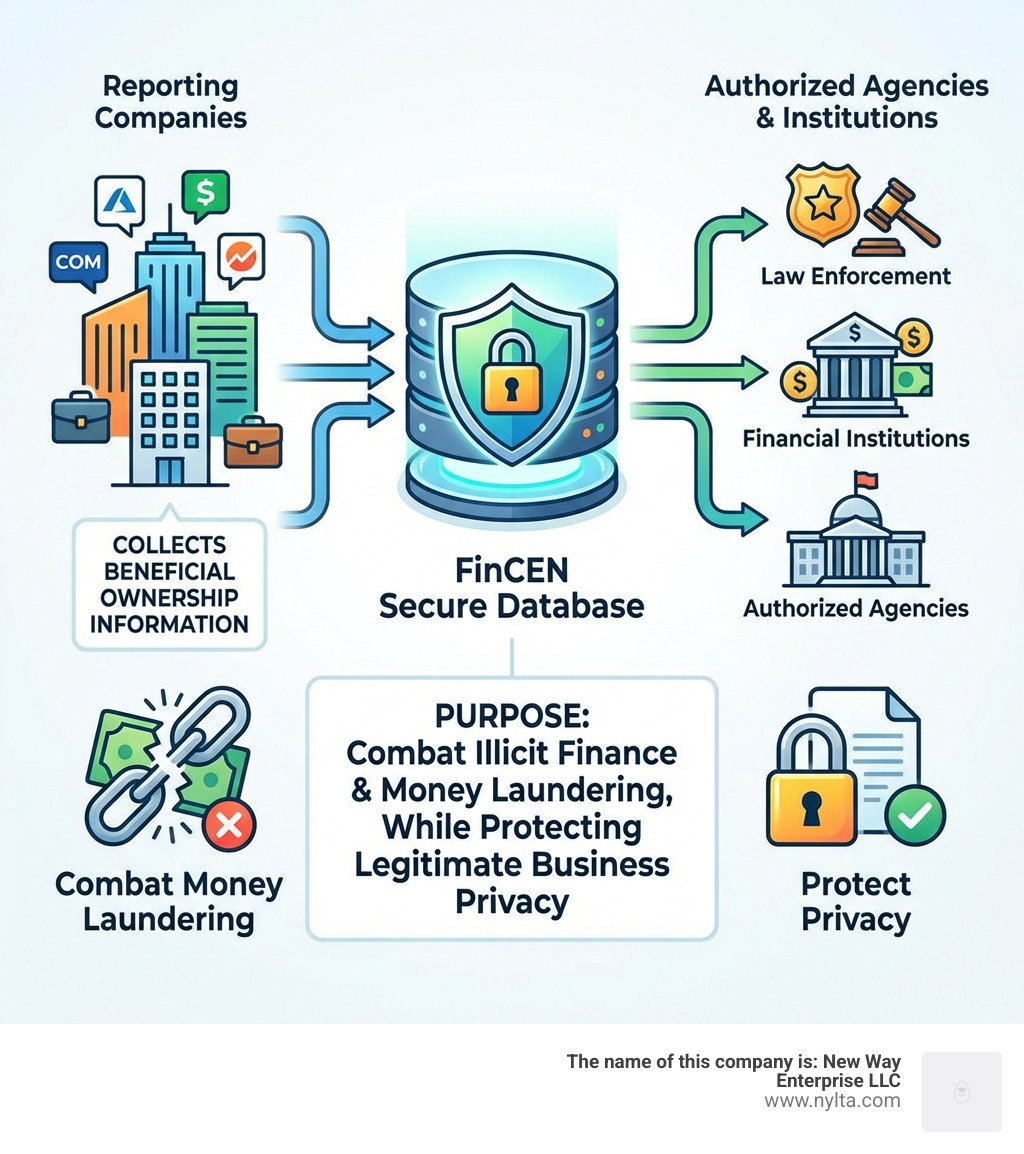
FinCEN was given the authority to collect Beneficial ownership information BOI, which identifies the specific individuals who ultimately own or control a business. By creating a centralized, secure database, law enforcement can more easily "pierce the corporate veil" of anonymous entities.
Even before the 2025 exemptions for domestic companies, the law included 23 specific types of entities that were exempt from reporting. These exemptions generally cover businesses that are already heavily regulated, such as:
Publicly traded companies (Securities reporting issuers)
Banks and Credit Unions
Insurance Companies
Tax-exempt entities (such as 501(c) nonprofits)
Large operating companies (Entities with more than 20 full-time employees, a physical office in the U.S., and over $5 million in gross receipts)
While the federal government has stepped back from domestic LLC reporting, the underlying definitions of "beneficial owners" remain relevant for foreign entities and for state-level transparency acts.
Who Must File: Identifying Beneficial Owners and Applicants
For the entities that are still required to report (primarily foreign reporting companies), identifying the correct individuals is the most critical step. A "beneficial owner" is any individual who, directly or indirectly, exercises "substantial control" over the company or owns/controls at least 25% of the ownership interests.
25% Ownership Threshold
Ownership isn't always straightforward. It includes:
Equity or stock
Capital or profits interests
Convertible instruments
Options or privileges to buy or sell interests
If a corporate entity owns the reporting company, you must look through that entity to find the natural persons who own it. For example, if an individual owns 60% of a parent company, and that parent company owns 50% of the reporting company, that individual has a 30% indirect ownership interest (60% x 50% = 30%) and must be reported.
Substantial Control
An individual exercises substantial control if they fall into any of these categories:
Senior Officers: CEO, CFO, COO, General Counsel, or President.
Appointment Authority: Anyone with the power to appoint or remove any senior officer or a majority of the board of directors.
Important Decision-Makers: Individuals who direct or have substantial influence over the company's finances, structure, or business operations.
Defining the Company Applicant
The "company applicant" is only relevant for companies created or registered on or after January 1, 2024. There are two types of company applicants:
The Direct Filer: The individual who physically (or electronically) files the document with the Secretary of State.
The Primary Director: The individual who is primarily responsible for directing or controlling the filing (e.g., an attorney who instructs a paralegal to file the documents).
Existing companies (those created before 2024) do not need to report company applicant information. Furthermore, once a company applicant is reported, the information never needs to be updated, even if the individual leaves the firm or the relationship ends.
Filing and Deadlines for Reporting Companies
For foreign entities that remain subject to the rules, the clock is ticking. You must use the official FinCEN E-Filing portal to submit your report.
April 25, 2025 Deadline: This is the new deadline for foreign reporting companies that were registered to do business in the U.S. prior to March 26, 2025.
30-Day Window: Foreign entities registered on or after March 26, 2025, have exactly 30 calendar days from the date they receive notice of their effective registration to file.
Updates and Corrections: If any information in your Beneficial ownership information BOI report changes (like a beneficial owner moving to a new address or getting a new passport), you must file an update within 30 days. If you discover an error, you have 30 days from the moment you become aware of it to file a correction.
Step-by-Step: Filing Your Beneficial Ownership Information BOI Report
Filing is handled entirely online. FinCEN does not accept paper filings by mail or fax. Here is what we recommend having ready:
Company Information: Legal name, any DBAs, current U.S. business address, jurisdiction of formation, and your Taxpayer Identification Number (TIN/EIN).
Beneficial Owner Details: Full legal name, date of birth, and current residential address.
Identifying Documents: You must provide a unique ID number from a non-expired U.S. driver’s license, U.S. passport, or (if the individual has neither) a foreign passport.
Image Uploads: You must upload a clear, readable image of the ID document (JPG, PNG, or PDF, max 4MB).
Many filers choose to request a FinCEN Identifier. This is a unique number issued by FinCEN to an individual. Once you have one, you can provide the identifier on future BOI reports instead of resubmitting all your personal details and ID images, which streamlines the process and enhances security.
Compliance, Penalties, and the NYLTA Connection
While the federal government has paused enforcement for U.S. companies, the statutory penalties for reporting violations remain on the books for those still required to report. Willful failure to file a report or providing false information can lead to:
Civil Penalties: Up to $500 for each day the violation continues.
Criminal Penalties: Fines of up to $10,000 and up to two years in prison.
The New York LLC Transparency Act (NYLTA)
This is where domestic LLC owners must stay alert. Even though the federal BOI requirement for U.S. companies has been removed, New York has implemented its own version: the New York LLC Transparency Act.
The NYLTA requires LLCs formed or authorized to do business in New York to file beneficial ownership disclosures with the New York Department of State (NYDOS). Unlike the federal pause, the NYLTA is moving forward. It mirrors many of the federal definitions but has its own specific filing system and deadlines.
At New Way Enterprise LLC, we specialize in helping business owners navigate these overlapping requirements. Through our dedicated platform, NYLTA.com, we provide automated status assessments to determine if your LLC is exempt or if you are required to file under New York law.
Frequently Asked Questions about Beneficial Ownership Information BOI
Is there a fee to file? No. Filing directly through the FinCEN website is free. Be wary of scams or fraudulent websites that look like government portals but ask for payment. FinCEN has warned about fake "Form 4022" or "Form 5102" solicitations.
How often must I update? BOI reporting is not an annual requirement. You only file an initial report, and then you only file again if your information changes or if you need to correct an error.
Is my information public? No. The Beneficial ownership information BOI reported to FinCEN is stored in a secure, non-public database. It is not accessible via FOIA requests. It is only available to authorized federal, state, and local law enforcement, as well as financial institutions (with your consent).
What if my company was impacted by a disaster? FinCEN has provided relief for hurricanes and other natural disasters. If your business is in a disaster-impacted region, you may be eligible for an extension. Check the FinCEN website for specific eligibility.
Conclusion
The rules surrounding Beneficial ownership information BOI have shifted from a "everyone must file" mandate to a more targeted requirement for foreign entities. While this is great news for U.S. domestic LLC owners at the federal level, the emergence of state-level laws like the NYLTA means that compliance is still a moving target.
We understand that you'd rather spend your time growing your business than reading through the Federal Register. That’s why New Way Enterprise LLC is here to help. Whether you need a compliance review, ongoing monitoring of new regulations, or a secure way to handle your New York state filings, our team has the expertise to keep you protected.
Don't let shifting regulations leave your business vulnerable. Learn more about our NYLTA compliance services on our dedicated platform, where we offer New York’s first automated status assessment and filing tool. Let us handle the red tape so you can get back to what you do best.