
The Great BOI Filing Wait and How to Survive It
Understanding Why Federal BOI Filing Suspended for Domestic Entities
The most significant shift in the corporate landscape occurred on March 26, 2025. On this date, the Financial Crimes Enforcement Network (FinCEN) issued an interim final rule that fundamentally altered the reach of the Corporate Transparency Act. For the vast majority of American small business owners, the message was clear: your federal boi filing suspended status is now a permanent exemption.
Under this new rule, FinCEN exercised its authority under 31 U.S.C. 5336(a)(11)(B)(xxiv) to officially exempt domestic reporting companies from the Reporting Rule. This means that if your company was created by filing a document with a secretary of state or a similar office under the law of a U.S. state or Indian Tribe, you are no longer considered a "reporting company" at the federal level.
Why the sudden change of heart? The Secretary of the Treasury determined that requiring millions of small, domestic businesses to report their beneficial owners did not serve the public interest. The primary reasons cited include:
Burdensome Labor Costs: Original estimates suggested total aggregate labor costs for initial BOI reports in the first year would hit a staggering $21.7 billion. By exempting domestic firms, the government expects to reduce these costs by approximately $13.6 billion immediately.
Small Business Relief: Ongoing annual costs for updates were projected at $2.3 billion. The exemption is expected to save the American economy an average of $9 billion per year going forward.
Reassessment of Utility: The Treasury concluded that the high cost of compliance for legitimate U.S. small businesses outweighed the national security benefits of collecting their data, especially when other tools like bank-level Customer Due Diligence (CDD) already exist.
This regulatory pivot, codified in 31 CFR 1010.380, effectively ends the federal reporting era for U.S. citizens owning U.S. companies. However, we must emphasize that while the federal Beneficial Ownership Filing is gone for domestic entities, state-level transparency initiatives are still very much alive.
The Legal Landscape: Texas Top Cop Shop and the Fifth Circuit
Before the March 2025 rule provided a clean break, the legal system was in a state of absolute chaos. Much of the confusion surrounding the phrase boi filing suspended stems from the landmark case Texas Top Cop Shop, Inc., et al. v. Garland, et al.
In late 2024, a federal district court in Texas issued a nationwide preliminary injunction, stopping FinCEN from enforcing the BOI reporting requirements. The Department of Justice (DOJ) immediately appealed to the U.S. Court of Appeals for the Fifth Circuit. What followed was a dizzying "ping-pong" match of legal orders:
December 23, 2024: The Fifth Circuit initially granted a stay of the injunction, meaning the reporting requirements were briefly "back on."
December 26, 2024: In a surprise move, the Fifth Circuit vacated its own prior order. This reinstated the nationwide injunction, effectively suspending the filing deadline for everyone while the appeal proceeded.
This rapid reversal left business owners paralyzed. One day they were told they had to file by January 1, 2025; the next day, they were told they didn't. This litigation created the environment that eventually led the Treasury to issue the March 2025 interim final rule, seeking to provide a more permanent regulatory solution rather than relying on the whims of the court.
How Court Rulings Left BOI Filing Suspended for Millions
The Texas Top Cop Shop case highlighted a growing sentiment that the CTA overstepped constitutional boundaries. During the pendency of this litigation, FinCEN was forced to accept that it could not move forward with broad enforcement. While the DOJ continues its appeal, the March 26 rule has largely mooted the argument for domestic companies by removing them from the rule's scope entirely.
For those who were worried about the original BOI Reporting Deadline, the court's intervention provided the necessary breathing room that eventually turned into a full exemption for domestic entities. Even so, the Beneficial Ownership Information Report (BOIR) E-Filing system remains active for foreign entities, who were not granted the same reprieve.
Foreign Reporting Companies: New Deadlines and Requirements
While domestic companies are celebrating their exemption, foreign reporting companies are facing a very different reality. The federal government has determined that foreign-formed entities present "heightened national security and illicit finance risks." Consequently, if your company was formed under the law of a foreign country and is registered to do business in any U.S. state, you still have a job to do.
The March 26, 2025, rule established strict new timelines for these entities:
Existing Foreign Entities: If your foreign company was registered to do business in the U.S. before March 26, 2025, you must file your initial BOI report by April 25, 2025.
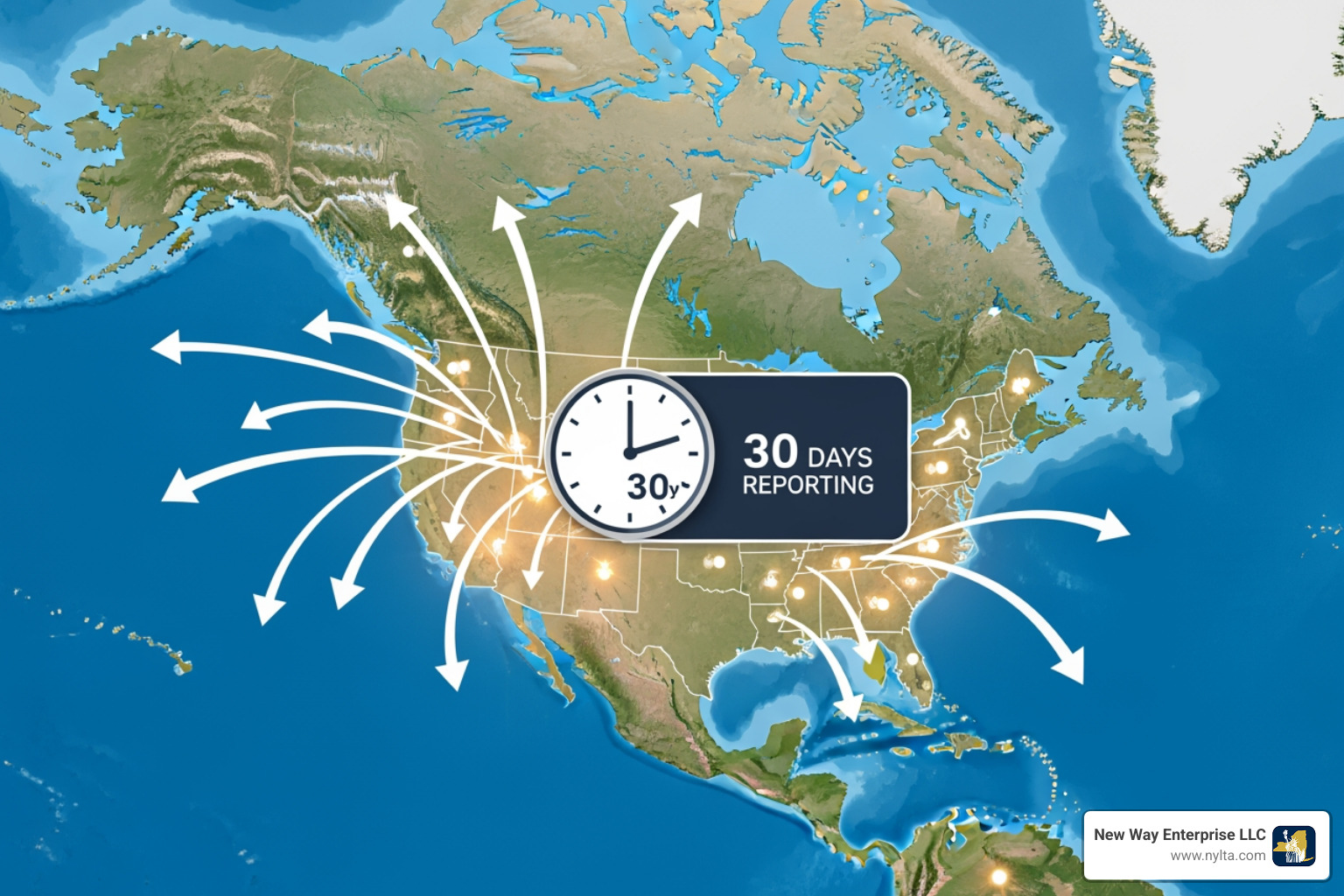
New Foreign Entities: If you register a foreign company in the U.S. on or after March 26, 2025, you have exactly 30 calendar days from the date of registration to file.
There is one major piece of good news for these companies: the "U.S. Person Exemption." Under 31 U.S.C. 5318(a)(7), foreign reporting companies are no longer required to report information about beneficial owners who are U.S. persons (citizens or lawful permanent residents). You only need to report your non-U.S. beneficial owners. This change was made to align with the goal of reducing burdens on American citizens while still tracking foreign influence and potential illicit finance.
Navigating Compliance When Your BOI Filing Suspended Status Changes
If you manage a foreign pooled investment vehicle or a complex international structure, your compliance needs are ongoing. Even though the domestic boi filing suspended status applies to many, foreign entities must still provide an accurate Beneficial Owner Report Form for their non-U.S. owners.
Furthermore, if there are changes to the information previously reported—such as a change in the non-U.S. beneficial owners or a change in the entity’s legal name—an updated report must be filed within 30 days. Failure to meet these deadlines can still result in significant civil and criminal penalties, as the suspension of enforcement only applies to domestic companies and U.S. citizens.
Federal vs. State: Why NYLTA Still Matters
This is where things get tricky for our friends in the Empire State. Many business owners hear that "federal boi filing suspended" and assume they are completely off the hook. This is a dangerous misconception. It is critical to understand that the New York LLC Transparency Act (NYLTA) and the federal FinCEN CTA filings are entirely separate requirements; completing one does not satisfy the other.
The NYLTA is a separate state law. While the federal government has backed off domestic companies, New York has doubled down on transparency. If you own an LLC formed in New York or a foreign LLC authorized to do business here, you must comply with the NYLTA, which has an effective date of January 1, 2026.
Feature Federal (FinCEN CTA) New York State (NYLTA) Status for Domestic Entities Exempt (as of March 2025) Required (effective Jan 1, 2026) Status for Foreign Entities Required for non-U.S. owners Required Filing Authority FinCEN (U.S. Treasury) NY Department of State (NYDOS) Information Privacy Private/Law Enforcement only Private/Law Enforcement only* Effective Date Suspended for U.S. persons January 1, 2026 Satisfied by Federal Filing? No No
Note: While both are currently private, state laws are subject to legislative changes regarding access.
At NYLTA.com, we specialize in helping you navigate this specific New York requirement. Even if you are exempt federally, you likely still need to file a New York LLC Transparency Act Filing by the state deadline. Filing with FinCEN does not satisfy your obligations to New York, and vice versa.
Frequently Asked Questions about BOI Suspensions
Do I still need to file if my company is domestic?
If your company is a domestic U.S. entity (LLC, Corporation, etc.), the answer at the federal level is no. The March 26, 2025, interim final rule redefined "reporting company" to exclude domestic entities. You are fully exempt from filing initial, updated, or corrected BOI reports with FinCEN. However, you must still check your state-level requirements, especially if you operate in New York.
What are the penalties for foreign companies now?
Foreign reporting companies are not included in the enforcement suspension. If a foreign entity fails to file by the April 25, 2025, deadline (for existing companies) or within 30 days of registration (for new companies), they may face the original penalties outlined in the CTA. This includes civil penalties of up to $500 per day and criminal fines of up to $10,000 and two years in prison.
Does the federal suspension affect New York's law?
No. The federal suspension is a result of FinCEN's regulatory reassessment and specific federal court cases like Texas Top Cop Shop. New York is a separate jurisdiction with its own legislative mandate. The NYLTA remains on track for its January 1, 2026, effective date. Domestic New York LLCs that are now exempt from federal filing will still need to file with the New York Department of State.
Conclusion
The "Great BOI Filing Wait" has ended in a major victory for domestic small businesses, but it has created a bifurcated system that requires careful attention. While your federal boi filing suspended status may be a relief, the emergence of state-level acts like the NYLTA means that transparency is not going away—it's just moving to the state capital.
At New Way Enterprise LLC, we understand that you want to focus on growing your business, not decoding regulatory jargon. Our platform, NYLTA.com, is designed to be your primary resource for New York compliance. Please note that NYLTA.com is a private platform and is not affiliated with any government agencies. We provide:
Automated Status Assessment: Quickly determine if your LLC falls under NYLTA requirements.
Secure Filing: A dedicated portal to handle your disclosures or exemptions for the New York Department of State.
Ongoing Guidance: We track NYDOS updates so you don't have to.
Don't let the federal suspension lull you into a false sense of security. If you have a New York LLC, the clock is ticking toward the January 1, 2026, effective date.

Stay ahead of the curve. Visit NYLTA.com today to ensure your New York LLC is fully protected and compliant before the state deadline arrives.