The Secret World of LLC Disclosure Exemptions
Why LLC Reporting Requirements Are More Complex Than Most Owners Realize
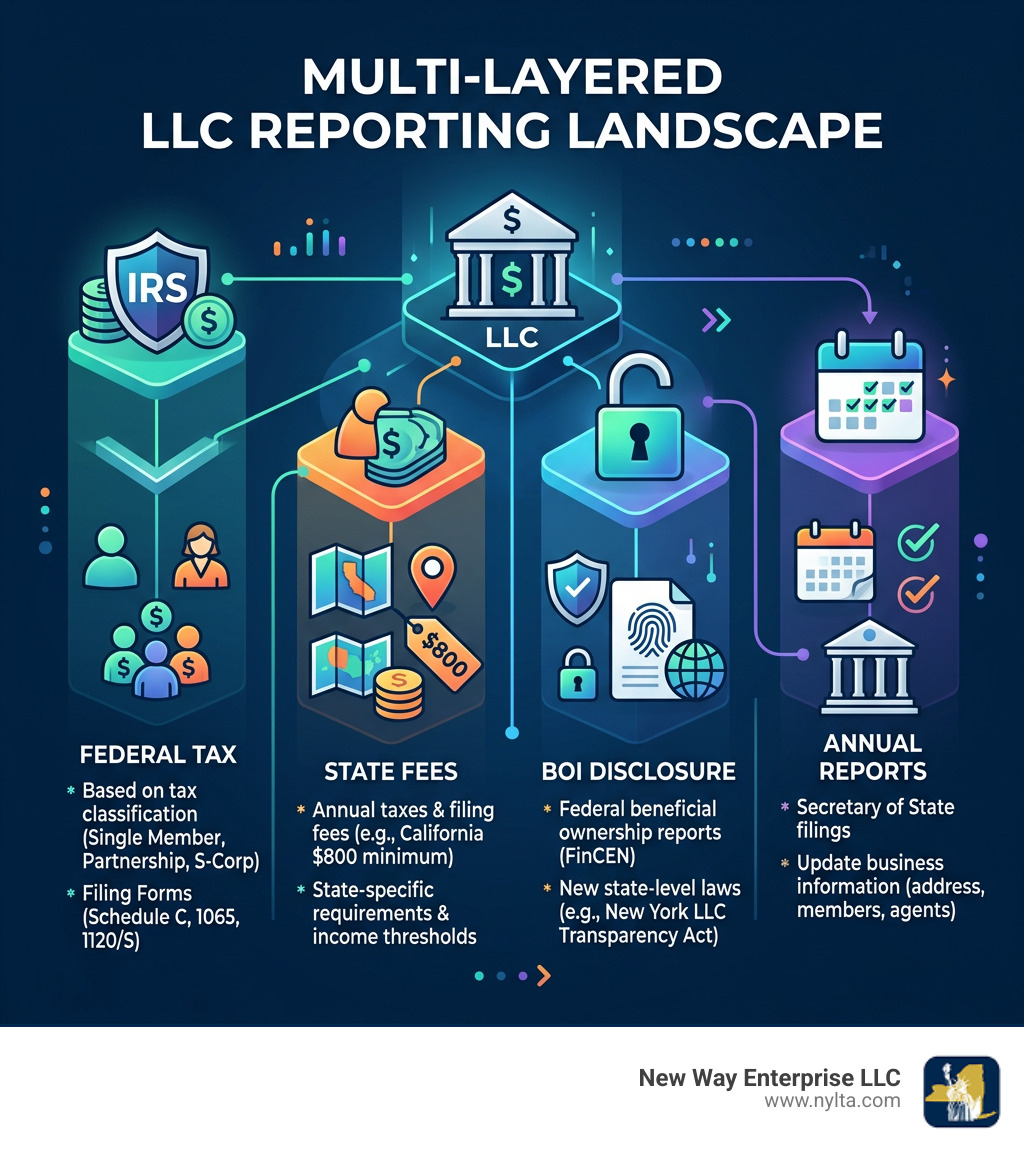
LLC reporting requirements cover multiple layers of rules-federal tax filings, state-level taxes and fees, and beneficial ownership disclosures-and missing any one of them can cost you serious money.
Here is a quick summary of the core requirements most LLCs face:
Requirement Who It Applies To Key Form or Action Federal income tax filing All LLCs Schedule C, Form 1065, Form 1120, or Form 1120S Beneficial ownership (BOI) Foreign-registered LLCs (domestic now exempt per March 2025 rule) FinCEN BOI E-Filing California annual tax LLCs doing business in California FTB 3522 ($800 minimum) California LLC fee LLCs with California income over $250,000 FTB 3536 California income return California LLCs Form 568 New York BOI disclosure LLCs authorized in New York NYLTA filing (effective January 1, 2026) State annual report Most U.S. states Secretary of State filing
Most LLC owners know they need to file taxes. What catches them off guard is everything else-the state fees, the ownership disclosure rules, and the new transparency laws rolling out at both the federal and state level.
One of the most overlooked risks right now is the New York LLC Transparency Act (NYLTA), which takes effect January 1, 2026. It operates as a completely separate system from federal FinCEN filings. Filing one does not satisfy the other.
I'm Ryan De Freitas, Founder and CEO of New Way Enterprise LLC and the platform behind NYLTA.com. We are a private compliance platform not affiliated with government agencies. I've built technology specifically to help business owners navigate LLC reporting requirements-including the new NYLTA beneficial ownership disclosure rules. In this guide, I'll break down every layer of reporting you need to understand so nothing slips through the cracks.
Federal LLC Reporting Requirements and Tax Classifications
When we talk about LLC reporting requirements at the federal level, we are usually talking about the IRS. The interesting thing about an LLC is that, from the IRS's perspective, it is a "tax chameleon." The IRS does not actually have a tax classification specifically for LLCs. Instead, they treat you based on how many members you have and whether you have made a specific election.
For most owners, the default classification is where federal compliance begins. If you do nothing, the IRS will categorize your business based on its membership. However, if you want to be taxed differently - for example, to align with how you pay owners, how you handle payroll, or how you plan to reinvest profits - you must proactively tell the IRS by filing Form 8832.
It is also vital to understand the difference between state and federal LLC reporting rules. While the IRS handles your income tax, your state handles your "right to exist" as a business entity.
Default federal tax treatment (what most LLCs start with)
The IRS default rules generally work like this:
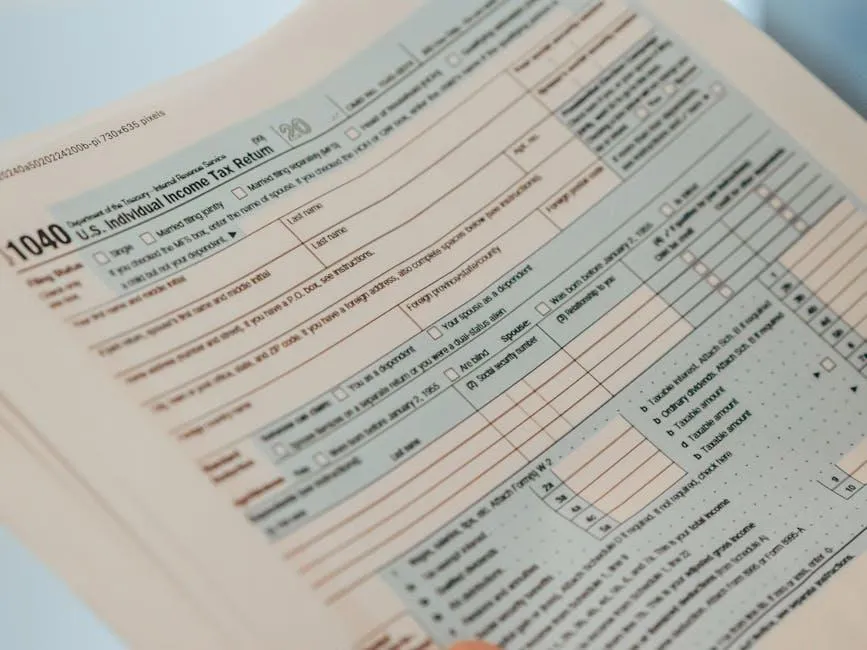
Single-member LLCs are typically treated as "disregarded entities" for federal income tax purposes. In many cases, business income and expenses are reported on the owner's return (often via Schedule C).
Multi-member LLCs are typically treated as partnerships by default and generally file Form 1065, issuing Schedule K-1s to members.
These defaults are part of why LLCs are popular: the entity can provide state-law liability protection while remaining a pass-through for federal income tax in many scenarios. But it also means your reporting obligations depend on how the LLC is structured, and on elections you may (or may not) have made.
Electing corporate tax status (when an LLC chooses different IRS treatment)
If the LLC elects to be taxed as a corporation, your federal filing requirements change. Depending on the election, you may end up filing Form 1120 (C corporation) or Form 1120S (S corporation) and, if applicable, filing Form 2553 for S corporation status.
These elections can affect how income is taxed and how owners are paid, but they do not replace your state-level entity compliance. Put simply: changing your IRS classification does not change the fact that your LLC still has state filing obligations, state fees, and potentially state beneficial ownership disclosures.
NYLTA.com focuses on New York's NYLTA compliance process (effective January 1, 2026), but understanding your IRS treatment is still important because it is one of the most common places owners assume "I filed my taxes, so I'm done." For most LLCs, taxes are only one layer of the overall compliance stack.
The Corporate Transparency Act and Federal BOI Reporting
Now, let's move away from the IRS and talk about FinCEN (the Financial Crimes Enforcement Network). In 2024, the Corporate Transparency Act (CTA) introduced a massive shift in LLC reporting requirements.
The goal is to stop bad actors from using "shell companies" to hide money. To do this, FinCEN requires most entities to file a Beneficial Ownership Information (BOI) report. A beneficial ownership filing identifies the real humans who are behind the curtain-who counts as a beneficial owner? Generally, it is anyone who:
Exercises "substantial control" over the company (like a CEO or Manager).
Owns or controls at least 25% of the ownership interests.
You can learn more about the specifics at FinCEN.gov, but keep reading because there have been some major updates recently. It is important to note that NYLTA and FinCEN CTA filings are separate and one does not satisfy the other. The NYLTA effective date is January 1, 2026, and NYLTA.com is a private platform not affiliated with government agencies.
State-Level Compliance: California and New York Mandates
While the federal government is simplifying things for some, states like New York and California are keeping the pressure on. It is critical to realize that state LLC reporting requirements are independent of federal ones.
Feature Federal FinCEN (CTA) New York (NYLTA) Effective Date January 1, 2024 January 1, 2026 Who Files Foreign Reporting Companies All NY-authorized LLCs Exemptions 23 specific categories Mirror federal exemptions Filing System FinCEN BOI E-Filing NY Department of State (NYDOS) Private Support Various NYLTA.com (Private Platform)
If you are authorized to do business in New York, you must prepare for the New York Beneficial Ownership Disclosure Requirements effective January 1, 2026.
The New York LLC Transparency Act (NYLTA) Shift
The NYLTA shift is perhaps the biggest change for New York business owners in decades. Starting January 1, 2026, every LLC authorized to do business in New York must either:
File a Beneficial Ownership Disclosure.
File an Attestation of Exemption (if you meet one of the 23 exemptions).
We cannot stress this enough: Filing your federal BOI report does NOT satisfy your NYLTA requirement. They are separate systems, managed by different agencies, with different deadlines. NYLTA.com is a private platform, not a government agency, designed to help you navigate the New York Department of State (NYDOS) requirements efficiently.
Penalties for Non-Compliance and Best Practices
Ignoring LLC reporting requirements is a recipe for disaster - agencies typically do not treat missed filings as harmless paperwork errors. Depending on the rule you miss, the consequences can include monetary penalties, loss of good standing, and the administrative inability to complete everyday business tasks like financing, contracting, or registering in other states.
Federal Penalties: For BOI reporting violations, civil penalties can reach $500 per day. Criminal penalties can include fines up to $10,000 and even prison time for willful non-compliance.
California Penalties: Missing your Statement of Information results in a $250 penalty from the Secretary of State. Failing to pay your $800 tax can lead to the suspension of your LLC, meaning you lose your right to sue in court and your limited liability protection might be at risk.
New York Penalties: Under NYLTA, failing to file for more than 30 days can result in "past due" status. If you hit the two-year mark without filing, your LLC can be suspended. You can read more about how non-compliance could cost you on our blog.
Just as important as the penalties is the operational fallout. Many owners only discover an issue when they try to:
Open or update a business bank account.
Close a funding round or apply for a loan.
Qualify to do business in another state.
Sell the business or add a new member.
In each case, being out of compliance can create delays, trigger extra filings, and increase costs.
Maintaining Accurate Records and Updates
Separate Your Finances: Never mix personal and business bank accounts.
30-Day Rule: Both FinCEN and NYLTA require you to update your information within 30 days of any change - like a change in address or a new member.
Professional Review: Use a platform like ours to ensure your filings are accurate. We've designed our system to show you how NYLTA.com makes ownership reporting fast, secure, and stress-free by automating the assessment of your exemption status.
Best-practice workflow for staying compliant across systems
Because LLC reporting requirements come from different authorities, the best process is to treat compliance like a recurring checklist rather than a one-time event:
Confirm your IRS classification and maintain clean bookkeeping for the tax forms your classification triggers.
Track your state entity obligations (annual report, Statement of Information, franchise or minimum taxes, and state income filings).
Treat ownership and control changes as compliance events, not just internal admin tasks.
Maintain a single source of truth for ownership details so your federal and state disclosures stay consistent where they overlap.
Reminder: NYLTA.com is a private platform, not a government agency. We do not provide legal advice. We help eligible businesses assess whether they appear to qualify for an exemption and prepare for NYDOS filing under NYLTA. If you are authorized to do business in New York, the best time to get organized is well before January 1, 2026 - so you are not trying to verify owners, control roles, and documentation at the last minute.
Frequently Asked Questions about LLC Reporting
Does filing with FinCEN satisfy New York state requirements?
No. While the NYLTA was modeled after the federal Corporate Transparency Act, they are entirely separate filing obligations. You must file with FinCEN (if required) and separately with the New York Department of State starting in 2026. NYLTA.com is a private platform, not a government agency, designed to help you manage these distinct requirements.
What is the most common reason LLC owners miss reporting requirements?
Most owners focus on income tax filing and assume that is the whole job. In reality, an LLC can have multiple parallel obligations: IRS filings, state annual reports, state taxes or fees, and beneficial ownership disclosures. Missing just one layer can create penalties or a loss of good standing.
If my LLC is exempt from federal BOI reporting, am I automatically exempt from NYLTA?
Not necessarily. NYLTA is a New York state law with its own filing system through the New York Department of State. While NYLTA generally mirrors the federal exemption categories, you still need to complete the correct New York filing path: either a Beneficial Ownership Disclosure or an Attestation of Exemption (if you qualify). Filing nothing is what creates risk.
Who is considered a beneficial owner under the new laws?
A beneficial owner is any individual who either exercises substantial control over the LLC (managers, officers) or owns/controls at least 25% of the ownership interests. It is important to look through "holding companies" to find the actual humans at the top.
What should I do now if I am authorized to do business in New York?
Start by getting organized: list your members and control roles, confirm current addresses and identifying information, and document any recent ownership changes. Then map which system applies to you:
FinCEN BOI (federal) - if required for your entity type.
NYLTA (New York state) - required for NY-authorized LLCs starting January 1, 2026.
NYLTA.com can help you prepare for the NYDOS process with exemption status assessment and guided filing support. We are a private compliance platform and do not provide legal advice.
Conclusion
Navigating LLC reporting requirements can feel like a full-time job. Between the IRS, FinCEN, and state-specific mandates like the NYLTA, it is easy for small business owners to feel overwhelmed.
However, compliance isn't just about avoiding fines; it's about protecting the "corporate veil" that keeps your personal assets safe. At New Way Enterprise LLC, we are dedicated to making this process as simple as possible through our private platform. Whether you need to figure out if you're exempt or you're ready to file your disclosure, NYLTA.com is here to help you meet the January 1, 2026, deadline with confidence. NYLTA and FinCEN CTA filings are separate and one does not satisfy the other. NYLTA.com is a private platform not affiliated with government agencies.
Don't wait until the 2026 deadline to start thinking about your New York obligations. Start your Transparency Act filing for small businesses today and give yourself the peace of mind that comes with knowing your business is in good standing. Secure your compliance now and avoid the last-minute rush.